New releases of 2015
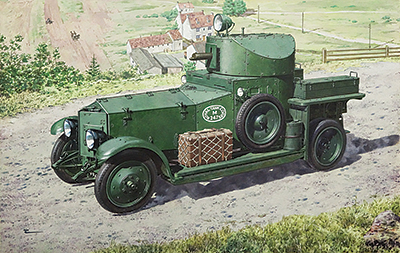
The British Armoured Car Pattern 1920 Mk.I was one of the first attempts in the history of 20th Century warfare to combine the construction of the car with armament, making it well-protected against an opponent's firearms. In the construction of this car the chassis of the Silver Ghost was used as a basis. A new armored superstructure was set on top of it, with a rotating turret fitted with a variety of different weapons. During WWI this car found wide application at the fronts in the African colonies and the Middle East, where long and exhausting battles to rearrange the map of the world were taking place. After the end of the war these armored cars executed, not for the first time, the functions of police constabulary, and keeping peace among mutinous tribes. Some modernization allowed them to carry on past the beginning of WWII and take part in its first stage, again mainly in the colonies of the British Empire.
We also want to surprise you with model kit of British airliner - Vickers Super VC10, which you can have in two different options - #313 Type 1151 (BOAC Airlines) and #329 Type 1154 (East African Airways)
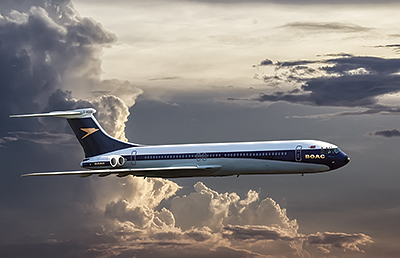
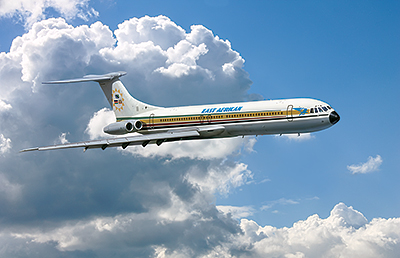
Vickers Super VC10 – was a long-range British airliner designed and built by Vickers-Armstrongs and its first flight was in 1962. The airliner was designed to operate on long-distance Empire routes and commanded excellent ‘Hot and High’ performance for operations from African airports. With its introduction by BOAC in April 1964, the VC10 became an immensely popular aircraft in the BOAC fleet, both with passengers and crew, being particularly praised for its comfort and low cabin noise levels. It was BOAC’s most successful Aircraft in terms of passenger numbers carried. The VC10 still holds the record for the fastest London to New York crossing of the Atlantic, of 5 hours and 1 minute. Other major users of the VC10 were East African Airways and the Royal Air Force, the latter only withdrawing from service its last VC10 in 2013.
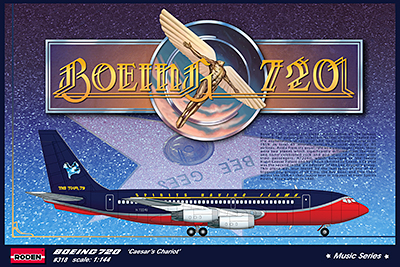
Boeing 720 – passenger plane, modification of the famous Boeing 707 passenger transcontinental airliner, created for the exploitation of regional and medium-haul air routes in 1959. In total 65 aircraft were built, used mainly by US airlines. Aside from its usual role as a passenger plane, there were two planes which significantly differed from the rest, and some celebrated rock and pop stars of the time were their passengers. N7224U, which belonged to the luxury Hotel Caesar Palace and had been christened Caesar's Chariot was the second in the 'air odyssey' of the Led Zeppelin group. This plane was also leased by the managers of one of the biggest pop groups of all time, the Bee Gees, and flew them across the USA on their major tour in support of their Spirits Having Flown album in 1980.
We’d like to remind that other kits of the Music series are:
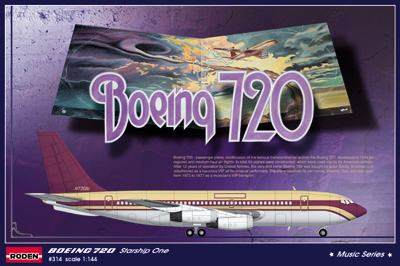
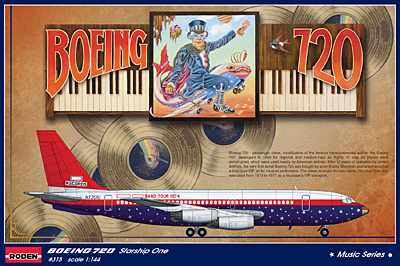
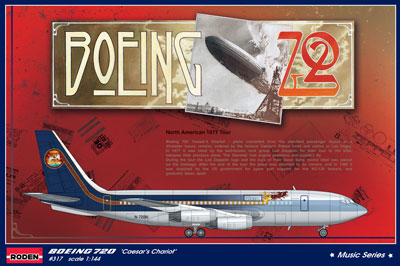
We hope you will also like our kits #323 and #808. Please see below brief information about them:
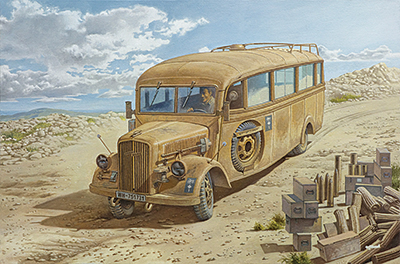
Opel Blitz 3.6-47 type W39 Ludewig – German staff bus of the WWII period, designed on the chassis of the well-known Opel Blitz three ton truck. Series production lasted from 1939 until 1943, at the Ludewig plant in the German city of Essen. From 1941 a number of changes were made to the construction of the bus, in particular, the spare wheel was moved to the left side of the body in a special niche. Almost three thousand units of this type were prodused during this time, which were employed at every front of the war, as a conveyance for officers and an ambulance, as well as a staff transport, a telephone exchange, a radio station and more.
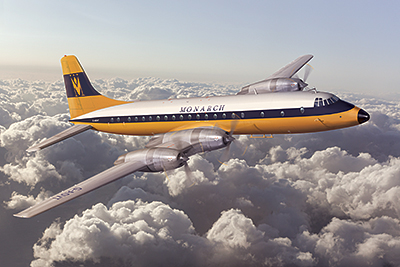
Bristol 175 Britannia – British four- engine turboprop passenger plane, designed in the late 1940s by the Bristol aero manufacturer. Series production began in the mid-1950s, and the first flight with paying passengers was at the beginning of 1957. The Bristol 175 Britannia was intended to be the flagship airliner of the leading British airline B.O.A.C., but several technical problems held back its development, limiting the production of the type to 86 units. A passenger favourite, first of all for special comfort, it was relegated to the second tier with the advent of the American Boeing 707. Monarch Airlines used 8 planes of this type, and the rest were sold to Canada, Cuba, Spain, Mexico, Israel and other countries. Separate machines were converted as transports. As a passenger plane it was used up to the beginning of the 1980s, and as a transport continued to fly in the mid-1990s.
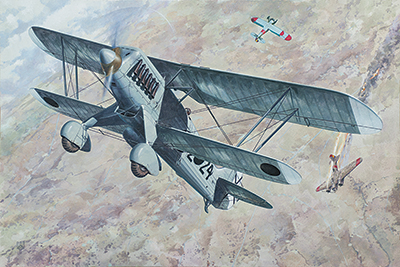
Heinkel He51 B.1 – German biplane fighter, created in the early 1930s by the Ernst Heinkel Flugzeugwerke aircraft manufacturing company under the leadership of the Günter brothers. The plane had a sturdy construction and was very elegant externally, and displayed good flight characteristics. At the commencement of military operations during the civil war in Spain in 1936 it was one of the first types to equip the Condor Legion, engaging in air combat with the Republican Air Force. It was generally inferior to its rivals and was soon retired from the front line and transferred to training and other units.
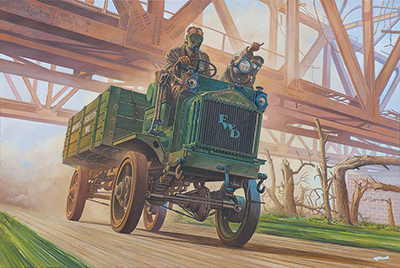
FWD Model B 3-ton Lorry – American truck of the World War I period, created by the Four Wheel Drive Auto Company in 1912. Like all machines of that time, it had quite a primitive design, but one particular innovation (the engine over the frame and the driver's cabin shifted forward) revolutionised the automotive industry. The FWD Model B was widely used in World War I. Of the total of 17,555 built, the vast majority (14,473) went to the US Army, while another 3,000 were sold to Great Britain, and 82 units were bought by Imperial Russia. The last surviving machines of this type were used in the early 1940s.
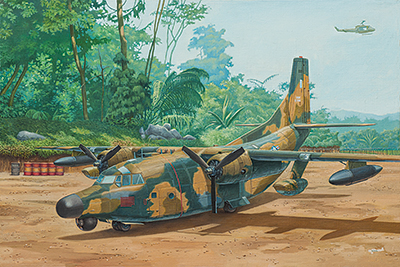
Fairchild NC/AC-123K – American strike aircraft, based on the C-123 Provider transport under the Black Spot research program. The main objective was to destroy aircraft ground targets from the air at any time, thus it was fitted with a variety of special equipment (Doppler radar, infrared sensors, laser rangefinder, on-board computers). Initially the AC/NC-123K was only to be an experimental aircraft, but in wartime conditions in Vietnam, two machines were converted to this standard and had full military trials from 1969 until 1971, and after the program were converted back into standard C-123 transports. The two machines managed to destroy several hundred enemy ground targets of different kinds, mainly trucks and boats in the valley of the River Mekong.
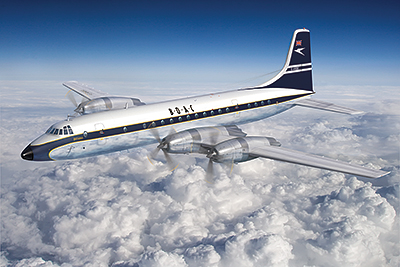
Bristol 175 Britannia – British four- engine turboprop passenger plane, designed in the late 1940s by the Bristol aero manufacturer. Series production began in the mid-1950s, and the first flight with paying passengers was at the beginning of 1957. The Bristol 175 Britannia was intended to be the flagship airliner of the leading British airline B.O.A.C., but several technical problems held back its development, limiting the production of the type to 86 units. A passenger favourite, first of all for special comfort, it was relegated to the second tier with the advent of the American Boeing 707. BOAC used 33 planes of this type, and the rest were sold to Canada, Cuba, Spain, Mexico, Israel, Argentina and other countries. Separate machines were converted as transports. As a passenger plane it was used up to the beginning of the 1980s, and as a transport continued to fly in the mid-1990s.
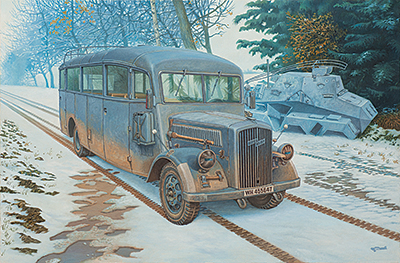
Opel Blitz 3.6-47 model W39 Ludewig – German staff bus of the WWII period, designed on the chassis of the well-known Opel Blitz three ton truck. Series production lasted from 1939 until 1943, at the Ludewig plant in the German city of Essen. Almost three thousand units of this type were prodused during this time, which were employed at every front of the war, as a conveyance for officers and an ambulance, as well as a staff transport, a telephone exchange, a radio station, and more.
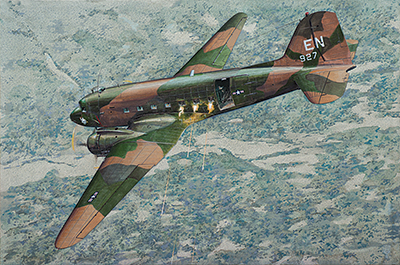
Douglas AC-47D Spooky – American ground attack aircraft of the Vietnam War, based on the famous C-47 Skytrain transport. The machine was designed specifically to combat ground targets, which were a significant problem for the US military command. Where their opponents offered only weak air defense the AC-47s were effective weapons in the zone of the so-called “Ho Chi Minh Trail”, but with the advent of substantial losses they were gradually replaced by more modern gunships. After the withdrawal of the US Air Force, some of them were used by Thailand and Laos up to the early 1970s. In total about 60 machines of this type were rebuilt or converted.