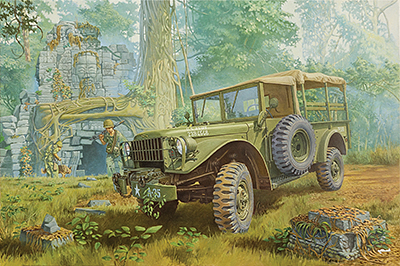
Новинки 2016 року
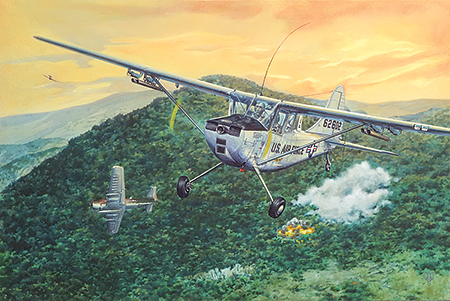
American light communications plane and artillery spotter developed in the late 1940s. Unlike previous designs in this class it had an all-metal design, and it could also be used for basic or operational training. The type was delivered to the US Air Force and also for the US Marine Corps. The plane took part in two major military conflicts of the second half of the Twentieth Century - the Korean and Vietnam Wars. Apart from its primary tasks it was often also used as a forward air controller, directing more powerful attack planes to the enemy's positions. In total more than 3,500 machines of this type were built, their military service lasted until 1974, and after replacement by more modern types the Bird Dog was used for civil air patrol and was sold on to private owners.
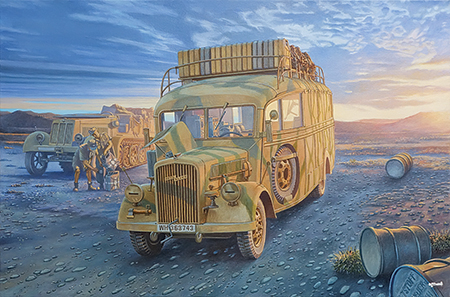
Opel Blitz 3.6-47 type W39 Ludewig – German staff bus of the WWII period, designed on the chassis of the well-known Opel Blitz three ton truck. Series production lasted from 1939 until 1943, at the Ludewig plant in the German city of Essen. Of the almost three thousand Blitz Omnibuses produced during WWII, a small number were converted into mobile command vehicles. Staff buses were equipped with a variety of special equipment and were used in all of the war's theaters of operations.
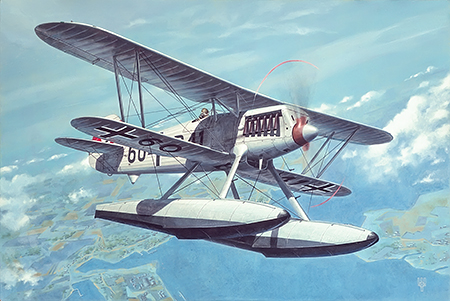
Heinkel He51 B.2 – German floatplane fighter of the mid-1930s, adapted from the Heinkel He 51B fighter. The main role of this type of machine was to patrol the coast and escort warships in the coastal zone. In total 46 examples of this variant were produced, which were in service during the second half of the Thirties. With the beginning of World War II, they were considered obsolete and were transferred to naval aviation schools and training units.
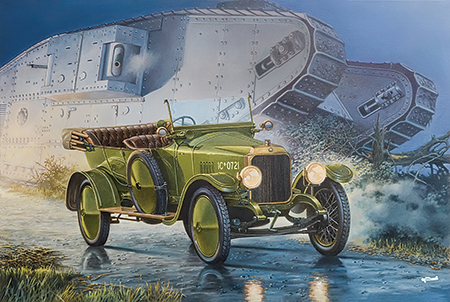
Vauxhall D-Type – British staff car of World War I. It was created by the Vauxhall Motors company based on its predecessor the Type C, better known by the informal name 'Prince Henry'. It was produced in large quantities (more than 1,500 units), and used in all the theaters of conflict of the Great War. One of the Vauxhall cars belonged to the King George the Fifth, who made a trip in this car to meet the troops right after the end of the war.
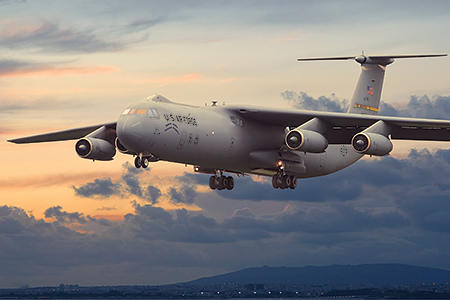
C-141B Starlifter – American jet cargo aircraft, developed through modification of the C-141A. It was intended for the transportation of military freight over long distances. During 1977-1979 a total of 271 machines were upgraded to the new version, whose operation continued until the late 1990s. The C-141B participated in Operation Desert Storm in 1991, however over the next few years it began to be gradually taken out of service because of the wearing out of the design. The C-141B owns a number of world aviation records, and among all military transport planes of the U.S. Air Force it was the safest for all its years of operation.
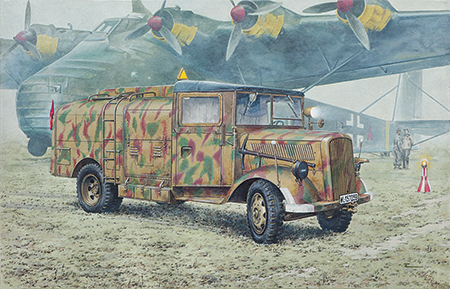
Opel Blitz Kfz.385 Tankwagen – German vehicle, airfield fuel servicing truck developed using the chassis of the well known three-ton Opel Blitz 3.6-3000 truck. Production began in 1941 and continued until 1943, during which time several hundred of this type of truck were produced. Despite their relatively small numbers, their use was very intensive, from North Africa to the Eastern Front. The fuel servicing truck was suitable for the supply of fuel to many different types of plane of the Luftwaffe, and in the last few months of the war some machines of this type were employed by units equipped with the Me 262 jet fighter.
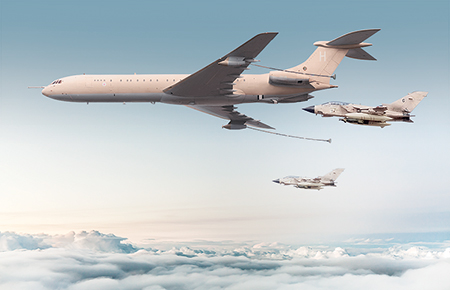
Vickers Super VC10 K3 – British aerial refueling aircraft, converted from the Vickers Super VC10 type 1164 passenger aircraft. Four such planes were rebuilt at the end of 1970, which in the next three decades took part in many well-known conflicts, among them the Falklands War, the first Iraq war (Desert Storm), the war in Afghanistan, the conflict in the former Yugoslavia and the second Iraq War (2003). Their last use was in 2011, when British forces supported the operation against the Gaddafi regime in Libya. In 2013, the type was removed from the structure of the Royal Air Force and it took places of honor in museums in the UK after more than 30 years of intensive military operations.
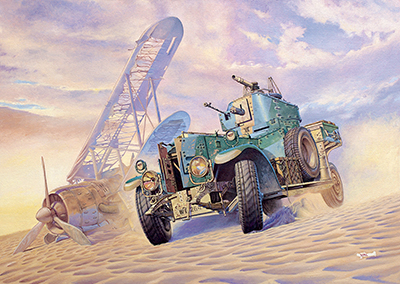
This first “Armoured Car” was built by the well known British automobile firm Rolls-Royce during WWI. In the early post-war years it underwent its first stage of modernization. It was widely used during the inter-war period of the 1920s and 1930s in many colonies of British Empire, principally for the repressing of revolts. The Rolls-Royce Armoured Car lived on to take part in the battles of WWII, mainly in Africa and the Far East. By then the car was further improved, with new wheels and disks, and a strengthened armored body. On top of that, the shape of the turret was changed and the armament was substantially increased. The changes were made to upwards of thirty of the cars which were used by British units until near the end of WWII.
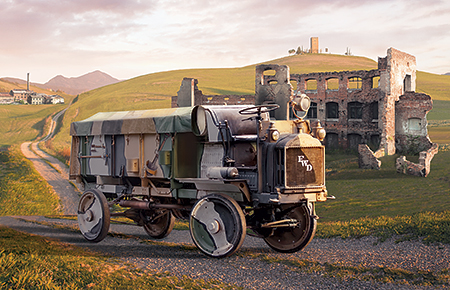
FWD Model B 3-ton Lorry – American truck of the World War I period, created by the Four Wheel Drive Auto Company in 1912. Like all machines of that time, it had quite a primitive design, but one particular innovation (the engine over the frame and the driver's cabin shifted forward) revolutionised the automotive industry. The FWD Model B was widely used in World War I. Of the total of 17,555 built, the vast majority (14,473) went to the US Army, while another 3,000 were sold to Great Britain, and 82 units were bought by Imperial Russia. Some of the trucks had a steel body for the transportation of artillery ammunition. The last surviving machines of this type were used in the early 1940s.