Новинки 2017 року
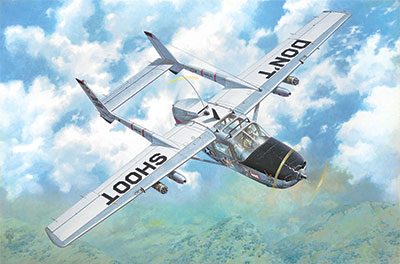
O-2A Skymaster - an American lightweight twin-engined airplane, created in the mid-1960s by the Cessna company and based on a civil version of the Type 337. It differed from conventional layouts in having fore-and-aft engines in the fuselage and a twin boom construction. Upon the outbreak of the Vietnam War, it was widely used as a communications and special missions aircraft, including a role marking targets for other heavier attack planes; and also as a rescue plane, with the purpose of evacuating pilots of damaged aircraft from enemy territory. In total, 532 airplanes of this type were produced, the combat service of which continued after the end of the Vietnam War, but only in communications and patrol tasks. Today, this aircraft is highly desired by private owners, not only in the United States but also in many countries around the world.
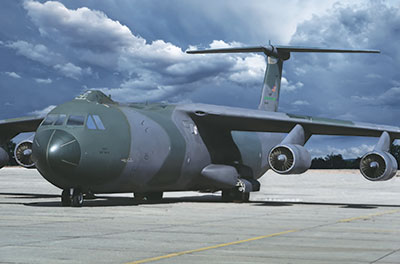
C-141B Starlifter – American jet cargo aircraft, developed through modification of the C-141A. It was intended for the transportation of military freight over long distances. During 1977-1979 a total of 271 machines were upgraded to the new version, whose operation continued until the late 1990s. The C-141B participated in Operation Desert Storm in 1991, however over the next few years it began to be gradually taken out of service because of the wearing out of the design. The C-141B owns a number of world aviation records, and among all military transport planes of the U.S. Air Force it was the safest for all its years of operation.
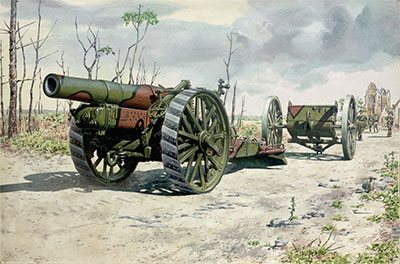
BL 8-inch howitzer Mark VI - heavy gun of the First World War, produced in 1915 at the Vickers plant. In addition to the UK, it was manufactured in the U.S.A. under license by the Midvale Steel and Ordnance Co., at Nicetown, Pennsylvania. This type of cannon was used on every major front of the First World War; some were transferred to allies, such as Tsarist Russia. After the First World the Mark VI was declared as obsolete in Great Britain which converted to other types with a new standard of caliber, and in 1939 some of the American guns, after the Soviet Union's aggression against Finland, were transferred to the armed forces of that country, where they remained in combat service until the end of the 1960s.
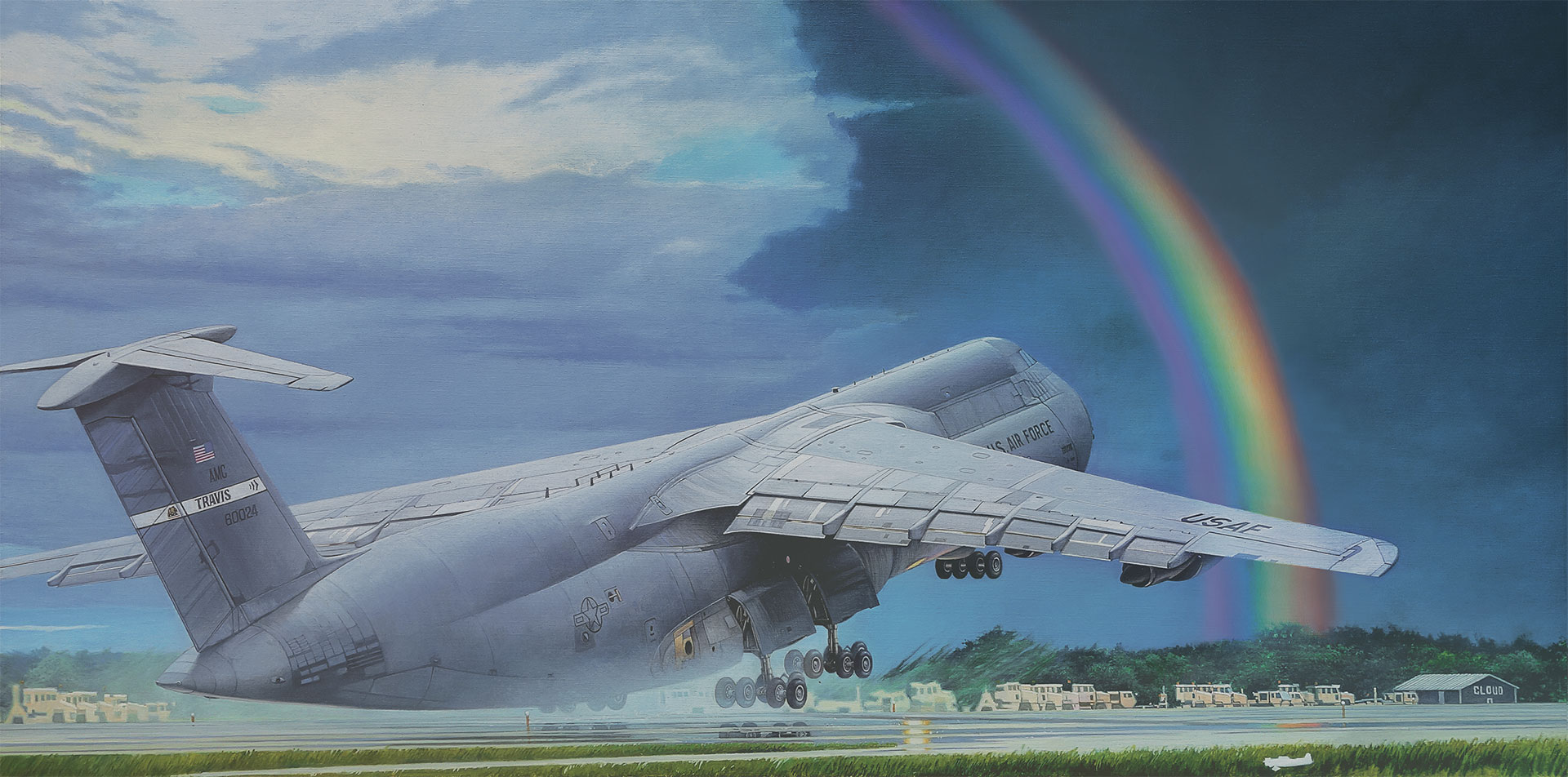
Lockheed C-5 Galaxy - the largest American military transport aircraft ever built. Its first flight took place in 1968, and overall 131 machines of various modifications were produced, many of which remain in military service today. The C-5 participated in every significant military conflict from the late 20th Century onwards (the Vietnam War, Yom Kippur 1973, the first and second Iraq wars, Operation Enduring Freedom in Afghanistan 2001 and others) and continually performed humanitarian missions in various parts of the world affected by large scale natural disasters. To this day the C-5 remains one of the largest aircraft in the world, along with the former Soviet AN-124 and AN-225, and has been the largest of all types in the US Air Force for half a century. The C-5B version was in production from 1985 to 1989, 50 built in total.
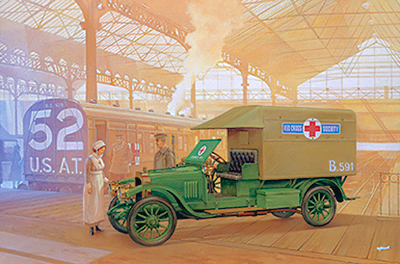
Vauxhall D-type Ambulance - British ambulance of the First World War, evolved by Vauxhall Motors from the famous Type D staff car. The car was redesigned for the transportation of wounded soldiers from the battlefield to military hospitals, and although it was not put into series production, it undertook this honorable mission in the early years of the Great War, along with other similarly converted cars, and it provided a foundation for the wider use of more modern advanced vehicles in this role in the British armed forces.
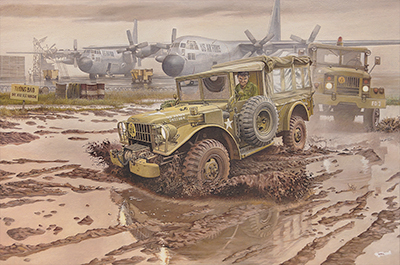
M42 - Command Car, developed from the widely used M37 truck, which was produced in large numbers in the 1950s. The vehicle was intended for the organisational needs of troops in field conditions, however it was not as numerous as the M37. There was no separate production of the M42 as such, instead the Dodge company made special conversion sets to turn the M37 into the M42, consisting of a new canvas awning, enhanced lighting in the rear of the vehicle under the canopy, a table for operational meetings and more powerful radio equipment. The exact number of machines converted to the M42 is unknown, however they were used alongside the M37 in many of the local conflicts of the second half of the 20th Century.
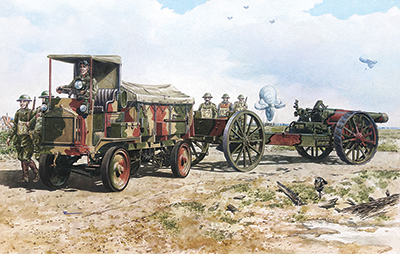
FWD Model B 3-ton Lorry – American truck of the World War I period, created by the Four Wheel Drive Auto Company in 1912. Like all machines of that time, it had quite a primitive design, but one particular innovation (the engine over the frame and the driver's cabin shifted forward) revolutionised the automotive industry. The FWD Model B was widely used in World War I. Of the total of 17,555 built, the vast majority (14,473) went to the US Army, while another 3,000 were sold to Great Britain. Trucks of this type were widely used not only in their usual role, but as mobile repair shops, ammunition carriers and tractors for heavy artillery, such as the Vickers Mk.VI howitzer.
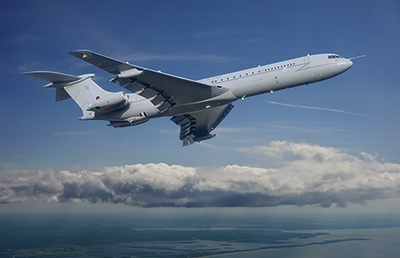
Vickers Super VC10 K4 – British aerial refueling aircraft, converted from the Vickers Super VC10 type 1151 passenger aircraft. Unlike its predecessor the VC10 K3, the new version had no fuel tanks in the fuselage, and planes of this type were principally intended for the aerial refueling of front line combat aircraft. Four such planes were rebuilt at the end of 1970, which in the next three decades took part in many well-known conflicts, among them the Falklands War, the first Iraq war (Desert Storm), the war in Afghanistan, the conflict in the former Yugoslavia and the second Iraq War (2003). Their last use was in 2011, when British forces supported the operation against the Gaddafi regime in Libya. In 2013, the type was removed from the structure of the Royal Air Force and it took places of honor in museums in the UK after more than 30 years of intensive military operations.
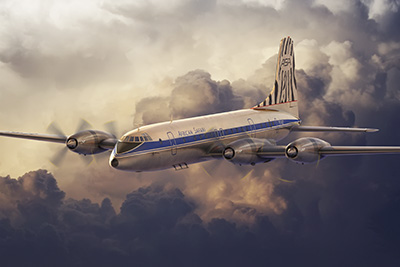
Bristol 175 Britannia – British four- engine turboprop passenger plane, designed in the late 1940s by the Bristol aero manufacturer. Series production began in the mid-1950s, and the first flight with paying passengers was at the beginning of 1957. The Bristol 175 Britannia was intended to be the flagship airliner of the leading British airline B.O.A.C., but several technical problems held back its development, limiting the production of the type to 86 units. Apart from BOAC, planes of this type were used by other well known air carriers, such as Monarch; and African Safari Airways, created in 1967, the principal bases of which were airports in Africa which had intensive charter flights from major European capitals at that time. Operation of the Bristol Britannia by Safari African Airlines airline lasted a relatively short while, until 1972, when its fleet was finally changed to jet aircraft exclusively.