Новинки 2019 року
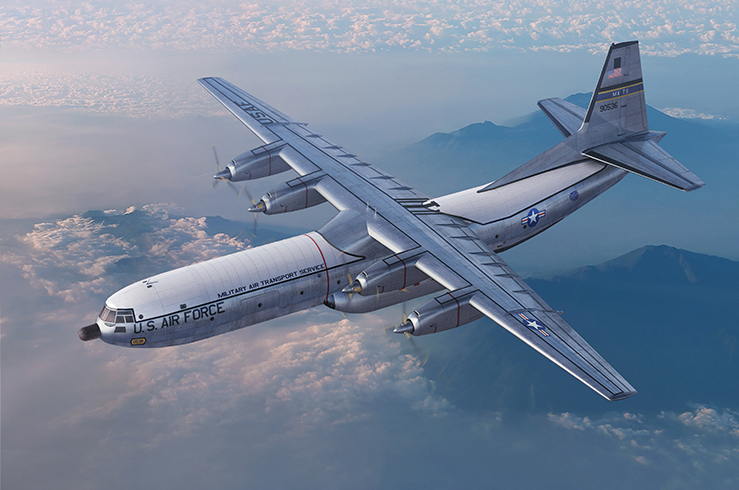
The C-133B Cargomaster was an American heavy-duty transport aircraft designed in the late 1950s. At one time it was the largest aircraft in its class, and the only one that could transport almost the entire range of arms of the US Army of any size. The C-133B's main difference from the earlier C-133A was its double-hatch cargo door, which significantly increased the range of dimensions of cargo that the aircraft could transport. It was also equipped with more powerful Pratt & Whitney T34-P-9W engines. The aircraft was extensively used during the Cold War between the superpowers to transfer large volumes of military cargo from the United States to Western Europe. The C-133B was used during the Vietnam War, and apart from military service, aircraft of this type were involved in the US space program for the repair of space equipment at Cape Canaveral, and finally, transferred to storage bases or museums. In total, 15 C-133B aircraft were manufactured.
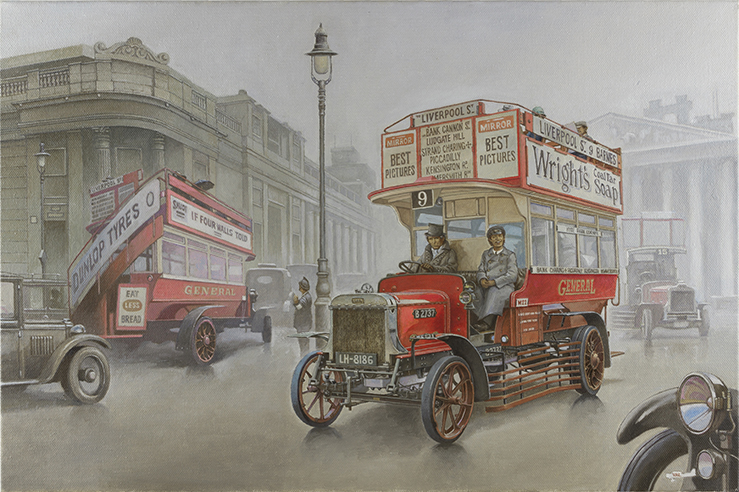
Type B Bus is an omnibus (bus) created in the UK in the early twentieth century to provide passenger transportation. The bus could carry up to 34 passengers exclusively on seating on two levels, since they were not allowed to be transported in a standing position. In total, about 2,500 buses were produced and used on many specially designed inland routes. The advent of omnibuses created significant competition for ancient transport, which consisted of horse drawn carriages (cabs) and soon omnibuses completely pushed them out of the streets of London. Since the outbreak of World War I, a large number of these vehicles have been requisitioned to the army to accelerate the transfer of troops from the rear to the immediate war zones.
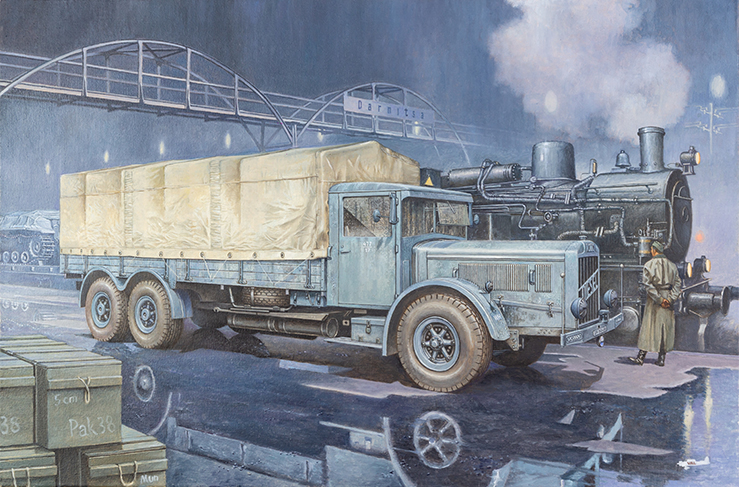
The VOMAG 8LR is a German heavy truck, created in 1935 by the VOMAG automobile engineering company. In total, in the prewar years, 100 units of trucks of this type were produced, which were used in the middle of the country, first of all for the rapid dispatch of large cargoes all over the country through a branched network of autobahns. With the start of the Second World War, the VOMAG 8LR, like many other trucks, was requisitioning to the Wehrmacht, but their military service, especially in the conditions of the Soviet Union, was very short due to the complexity of the suspension design. The small number of these trucks, which was converted to equipment for equipment delivery to the troops, was used in the conditions of the Eastern Front until the middle of 1943.
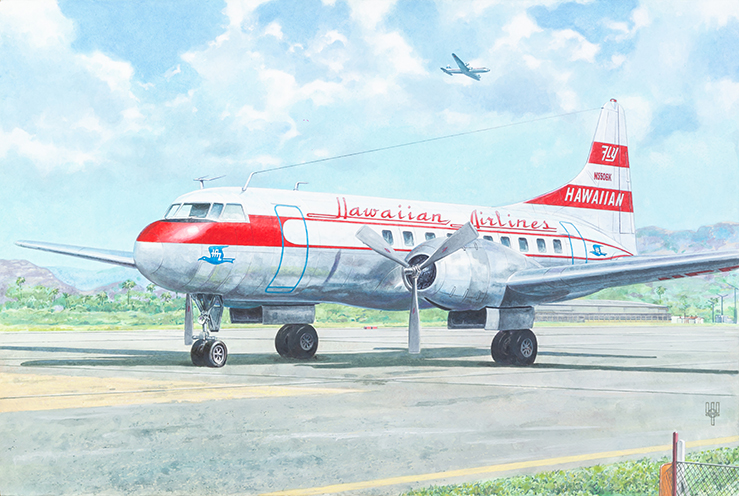
The Convair 340 is an American twin-engined short-haul aircraft, created in the United States in the early 1950s by the Convair Aircraft Corporation. For its time, the aircraft had excellent characteristics and was one of the best representatives in its class, but the rapid development of aviation connection has already required the involvement of more passenger-intensive vehicles for domestic air transportation, and therefore the Convair 340 was built only in a quantity a little more than 200 units, almost half of which bought the US Army for their own needs.Other aircraft during the 50s and 60s of the 20th century carried air travelers not only in the US, but also in the leading airlines of the world. The operators of Convair 340 in this era were Braniff, Continental, Hawaian, Delta, Alitalia, All Nippon, Finnair, KLM, Lufthansa and others. Airplanes of this type were used until the end of the 1960s.
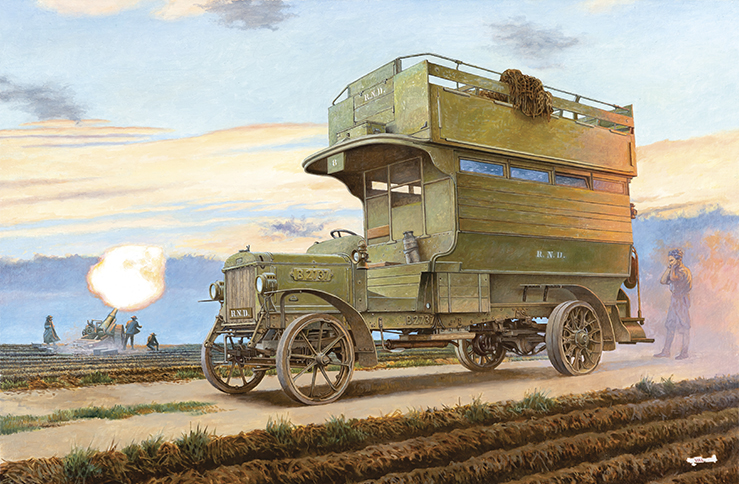
Type B Bus - an omnibus (bus), created in Great Britain at the beginning of the 20th century to provide passenger transportation. With the beginning of the First World War, a significant number of these vehicles were requisitioned for the army in order to speed up the movement of troops from the rear to the immediate combat zones. Buses of this type were used during the Battle of Ypres, the Battle of the Somme and other significant battles of the Great War.
In addition to transporting soldiers, they were often used for the purpose of delivering military ammunition, provisions and medical supplies equipment. Type B Bus was also used in the first post-war months for the return of soldiers to their homeland, and after demobilization they returned to the streets of London for their main role, transportation civilians in the city. One of the omnibuses got its own semi-official one the name Ole Bill in honor of the caricature character of the British soldier, created during the war years, and took part in numerous post-war events memorial parades as a symbol of the Great War, and today is an honorary exhibit of the Imperial Military Museum of Great Britain in London.
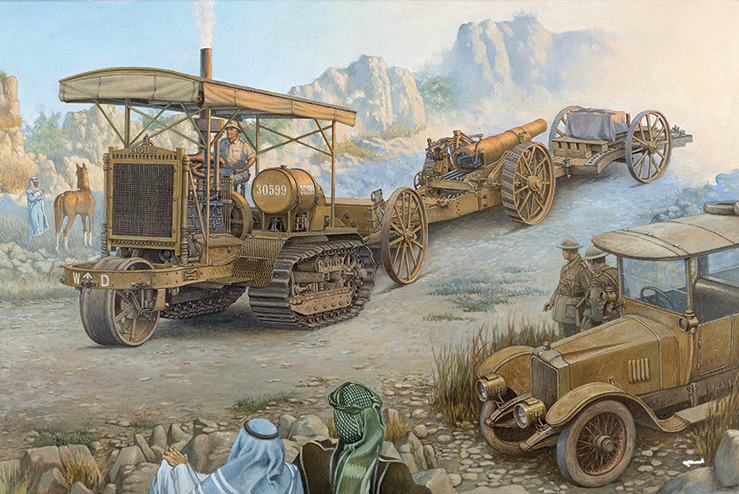
The Holt 75 was a heavy artillery tractor, produced in the early 20th Century by inventor Benjamin Holt in the United States. At first it was used exclusively for agricultural needs, but with the outbreak of the First World War it was brought into military service as a mover of heavy artillery pieces that could not be hauled by the physically limited horse-drawn harness. In addition to Great Britain, these machines were also used by France and the United States. A total of 2,000 tractors of this type took part in the First World War. They became the forerunner of a major new element in the mechanized army - the artillery tractor, since used with great success up to the current day.
Scale 1:144
#300
Douglas C-47 Skytrain (Dakota Mk.III) On June 6, 1944, one of the largest military operations of the Second World War began, which went down in history as Operation Overlord, or Day D. Thousands of Allied forces made a huge landing on the coast of Normandy, using all the technical capabilities of the time, including aircraft. A huge armada of aircraft that morning carried out a massive redeployment of troops, primarily airborne. Thousands of paratroopers who had fallen from the sky into the territory of France very quickly occupied key strategic sites and territories. A special role in this belonged to the outstanding transport aircraft Douglas DC-3b, which hundreds of overcame the airspace of the occupied territory on that day, while delivering parachutists and transport gliders with the goal of the most rapid change of situation in this crucial period of the Second World War. Douglas DC-3 was used both in the US Air Force and in the Royal Air Force under the designation Dakota, and his personal contribution to the history of World War II is particularly significant primarily for his participation in Operation Overlord.
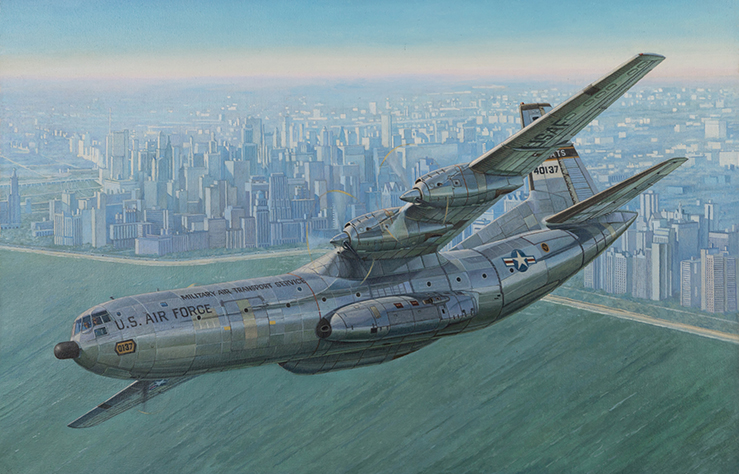
C-133A Cargomaster - American heavy transport aircraft, developed in the late 1950s. At one time, it was the largest plane in the heavy category, and the only one that could transport almost the whole range of armaments of the US Army of any size. The aircraft was intensively used at the height of the Cold War between the superpowers for the transfer of large volumes of military cargoes from the United States to Western Europe. The C-133A was also used during the Vietnam War, and C-133s took part in the US space program in order to ship equipment to Cape Canaveral. After the discovery of extensive structural defects, all aircraft of this type were taken out of military service and transferred to storage facilities or to museums. The last application of the C-133 occurred in 1976 when oil equipment was shipped to Alaska. 35 C-133A variants were built.
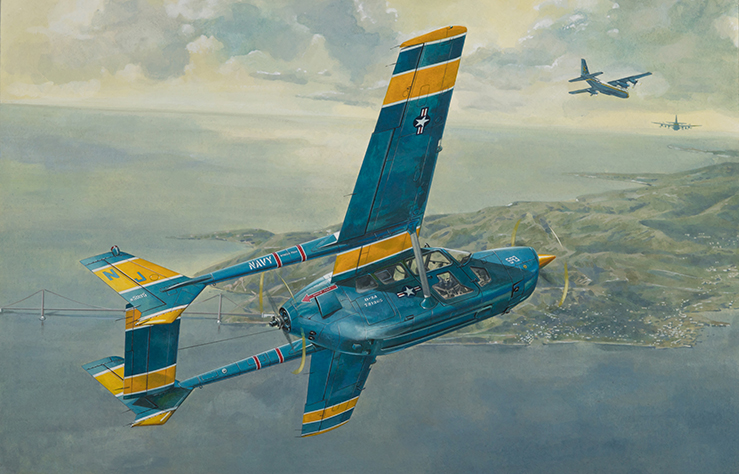
O-2 Skymaster - an American lightweight twin-engined airplane, created in the mid-1960s by the Cessna company and based on a civil version of the Type 337. It differed from conventional layouts in having fore-and-aft engines in the fuselage and a twin boom construction. Upon the outbreak of the Vietnam War, it was widely used as a communications and special missions aircraft, including a role marking targets for other heavier attack planes; and also as a rescue plane, with the purpose of evacuating pilots of damaged aircraft from enemy territory. In 1980, six O-2s were transferred to the US Navy as range controllers for strike aircraft training. The airplanes were originally based in California, and later they were transferred to the NAS Fallon in Nevada. All six machines were used up to the end of the 1980s, after which they were decommissioned. Altogether, 532 aircraft of this type were manufactured.
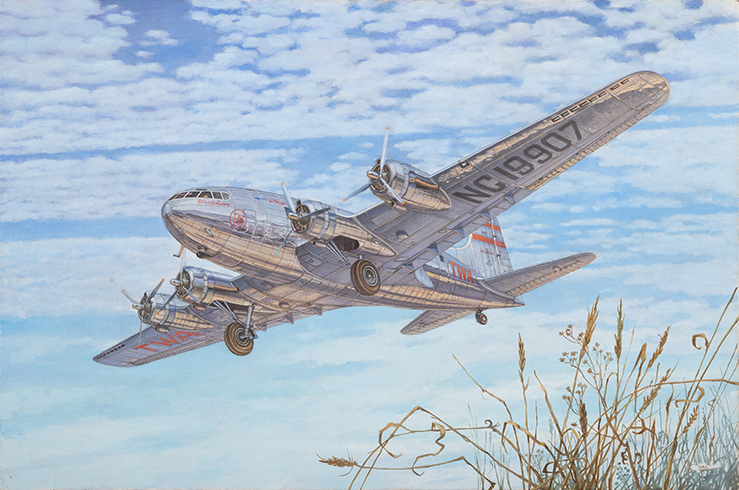
The Boeing 307 Stratoliner (TWA SA-307B) was an American passenger aircraft produced in the late 1930s by the Boeing Aircraft Company. It was the first passenger aircraft in the world with a pressurized cabin, which, unlike all other aircraft at that time, could fly at an altitude where the dangers of flying through storm clouds were minimal. In general, six SA-307B aircraft were built and used by TWA for transcontinental flights from 1940 to the end of 1941. With the entry of the United States into World War II, five SA-307Bs were requisitioned by the Army, serving until the end of the war. They were rebuilt and eventually resold to the French airline Aigle Azur Transports Aeriens. The last surviving SA-307B was used for air travel in the mid-1970s.
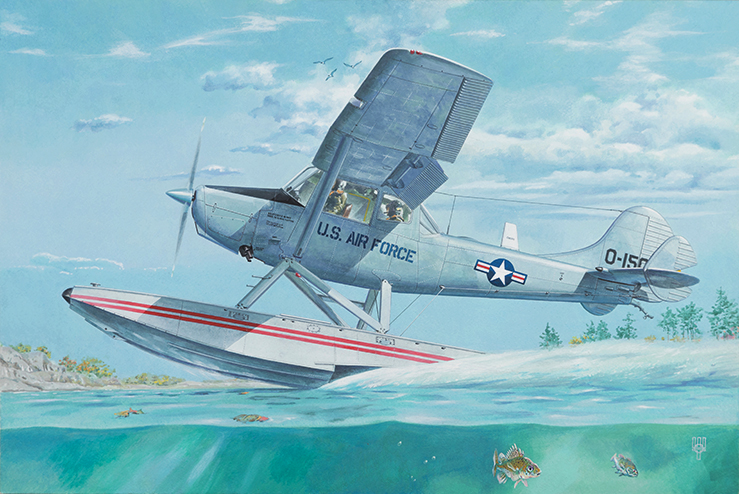
L19/O-1 Bird Dog Floatplane - American light aircraft, a floatplane modification of the famous 0-1 army multipurpose aircraft. The aircraft had the ability to operate from water areas of varying size, including the smallest, but it was not widely used, unlike the original design with conventional wheeled undercarriage. A few examples were used for patrolling in districts adjacent to water bodies, and later all planes of this type were sold on to private owners, some of them remaining in use even today.
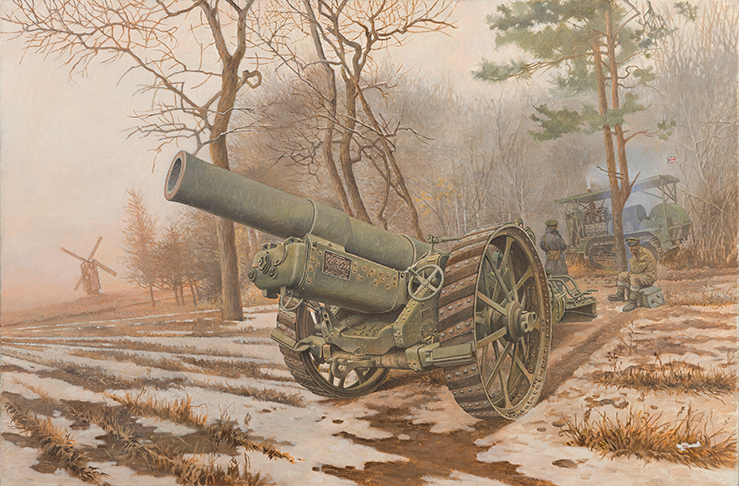
BL 8-inch howitzer Mark VI - heavy gun of the First World War, produced in 1915 at the Vickers plant. In addition to the UK, it was manufactured in the U.S.A. under license by the Midvale Steel and Ordnance Co., at Nicetown, Pennsylvania. This type of cannon was used on every major front of the First World War; some were transferred to allies, such as Tsarist Russia. After the First World the Mark VI was declared as obsolete in Great Britain which converted to other types with a new standard of caliber, and in 1939 some of the American guns, after the Soviet Union's aggression against Finland, were transferred to the armed forces of that country, where they remained in combat service until the end of the 1960s.