Моделі 2022 року
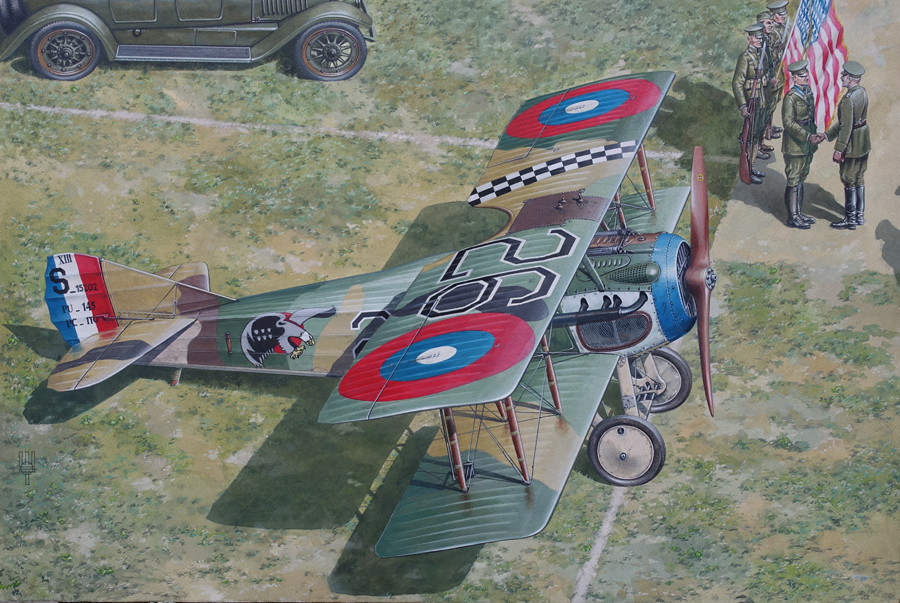
SPAD XIIIc.1 – French fighter of the First World War, developed in 1917 by the SPAD company from the earlier highly successful SPAD VIIc.1. The new type differed from its predecessor in its slightly larger dimensions, the shape of the cowling and its control surfaces. Late-model aircraft had straightened wing tips, a new radiator grille, and differently shaped side louvres. In total, in 1917-1918, almost 8,000 fighters of this type were built, and used not only by the French Air Force, but also by other countries, such as Great Britain, the United States, and Italy.
Many famous aces, such as Georges Guynemer, Francesco Baracca and Eddie Rickenbacker, piloted this aircraft, gaining a significant number of their victories in the air with it. The front line service of the machine continued even into the first few years after the war, and the SPAD XIII was one of the most important fighter aircraft of the newly created US Air Force up to the 1920s.

The GMC PD3751 Silversides was an intercity bus, created in the mid-1930s by the Yellow Coach automobile company to the order of one of the largest passenger carriers, Greyhound Lines. The bus was a revolution in automobile construction, corrugated aluminum and polymer materials being widely used, and during development special attention was devoted to providing maximum comfort for passengers, since after the construction of a wide network of high-quality highways between all the cities of the country in the years of the Great Depression, railway passenger transportation nearly ended due to its inability to compete with fast auto connections. Series construction commenced from 1939 at the Pontiac West Assembly facility in Pontiac, Michigan, where General Motors had previously assembled pickup vehicles and trucks. In addition to Greyhound Lines, buses of this type were also used by other national carriers, such as Trailways Travels, which served mainly the Southern states. Silversides bus operations continued almost until the end of the 1950s, after which a large number of them were resold to third countries, mainly in Latin America. This bus is one of the classic symbols of the United States, on the same level as Ford cars and Boeing airliners, and personifies the significant technological progress that made this country great in the first half of the 20th century.
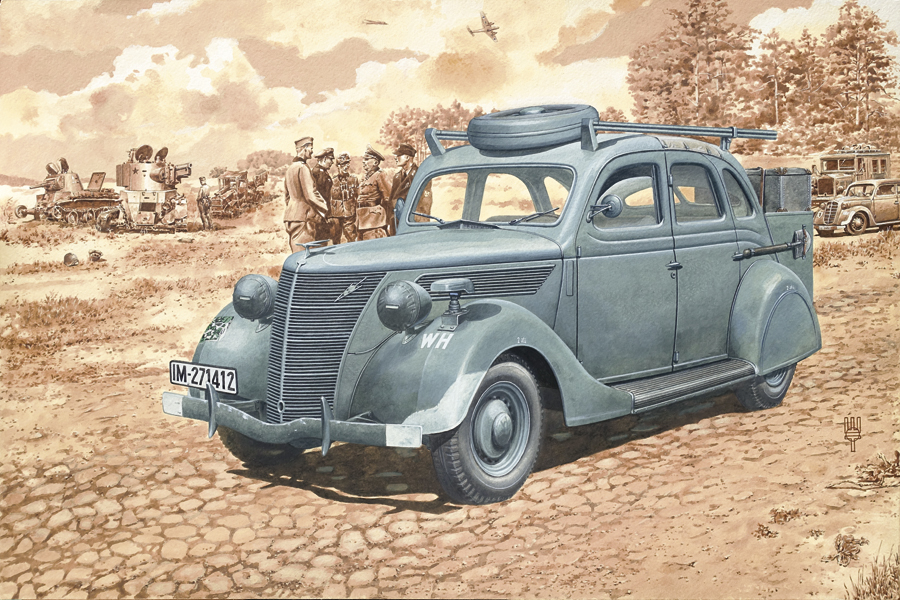
Ford V8-G81A Funkkraftwagen - specialized German communications vehicle, converted from the G81A car. In order to install the sizeable radio equipment, the car body was partly rebuilt, and fitted with radio coils, cables and other dedicated equipment. These machines were used primarily in radio field units and sometimes in Wehrmacht reconnaissance units. Despite the relatively small number of such vehicles, their operation was quite intensive and lasted almost until the end of World War II on both the Eastern and Western fronts.
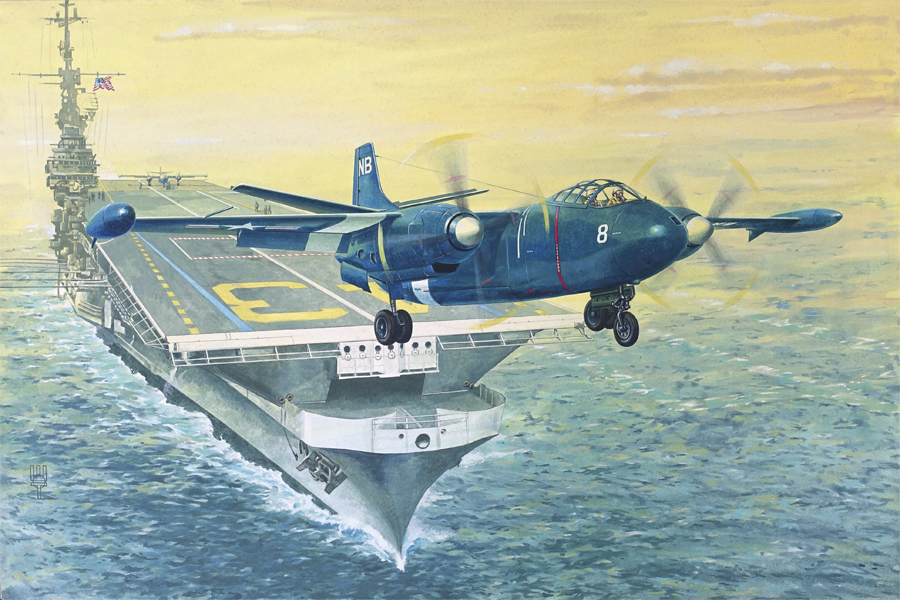
The North American AJ-1 Savage was a United States carrier borne bomber designed in the 1940s. The aircraft's main task was to carry and deliver a nuclear weapon, which at that time, due to its size, had to be deployed by the aircraft near the target zone. Series production began in 1949 and continued until 1952, after which the AJ-2, a greatly improved version appeared. Due to frequent accidents during takeoff and landing from aircraft carriers, It was decided to use the AJ-1 mainly for training or as a bomber with conventional weapons, and only after the advent of the AJ-2 and elimination of shortcomings they were modified as the AJ-1 (Retrofitted) and operated again from deck carriers with nuclear weapons; and later after being retired from the bombing role, they were employed as air-to-air refuelers. The AJ-1 was based on aircraft carriers that were sent to the South-East Asia region after the start of the Korean conflict, but no aircraft of this type were involved in this war or afterwards. A total of 47 AJ-1 aircraft were built.
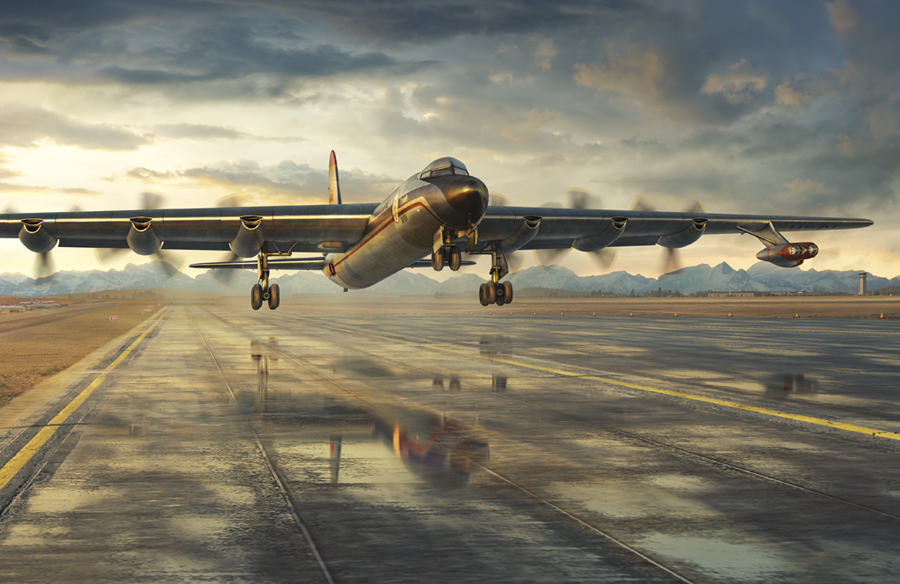
The Convair NB-36H Crusader was an American research aircraft built in 1955 based on the B-36H bomber to determine the possibility of installing a nuclear reactor and so remain airborne for a long time. The nuclear reactor was located in the rear of the bomber, and its operation was monitored via telemetry by specialists seated next to the crew in a special compartment protected by lead shielding.
In all, from 1955 to 1957, the NB-36H Crusader made 47 test sorties, during which the nuclear power plant was turned on only as an auxiliary unit. Due to numerous risks, the principal of which was the unresolved issue of significant contamination in the event of the crash of such an aircraft, the research program was terminated and all future projects involving this type of aircraft were considered dangerous and unpromising.
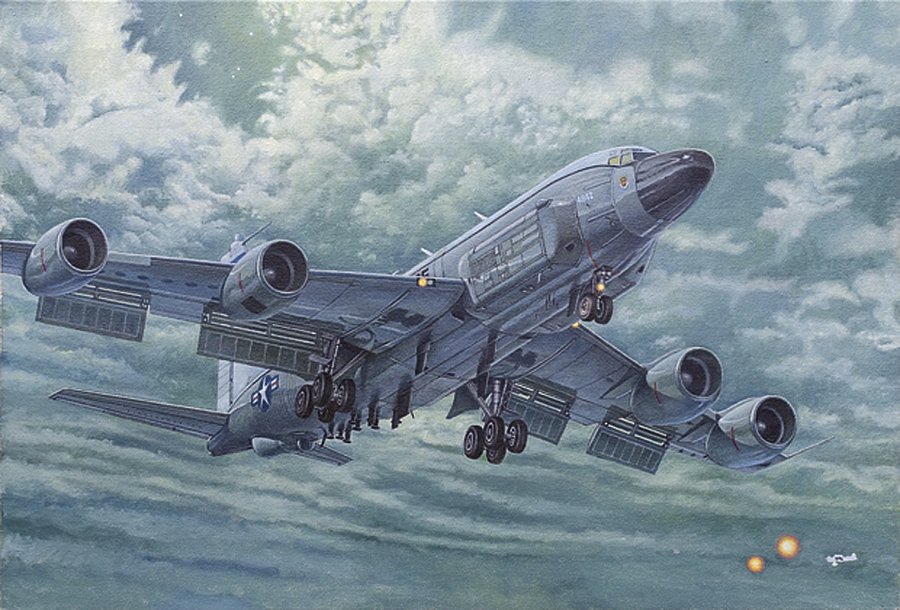
Meet our new release of May - #349 Boeing RC-135V/W Rivet Joint, scale 1:144. The painting for this model is special for us because this is the latest work painted for Roden by our talented artist Valery Grigorenko...
RC-135V/W - a specialized aircraft for airborne electronic reconnaissance, developed in the 1970s. The main tasks of the RC-135V and RC-135W are to identify sources of radio signal in the area of potential combat operations, collect information on land, sea and air targets, intercept radio communication between command posts and combat units, and monitor enemy air defenses. For this very specific work, the aircraft crew consists of 12 to 16 surveillance operators and analysts for the purpose of operational data collection. Usually the RC-135V and RC-135W perform tasks together with other reconnaissance aircraft such as the E-3 AWACS, transmitting all the collected information to it as a mobile command post through a special encrypted communication channel. The RC-135V and RC-135W have been in service with the US Air Force for over 40 years and are the main type used for these operations; and since 2013, three RC-135Ws have been adopted by the Royal Air Force of the United Kingdom.